Make an AI Girlfriend and Generate Pictures of Her
Designing a character takes two minutes. Getting pictures that are recognisably the same woman every time is the hard part. Here is what decides it, and what to check before you commit.
Published · For adults 18+
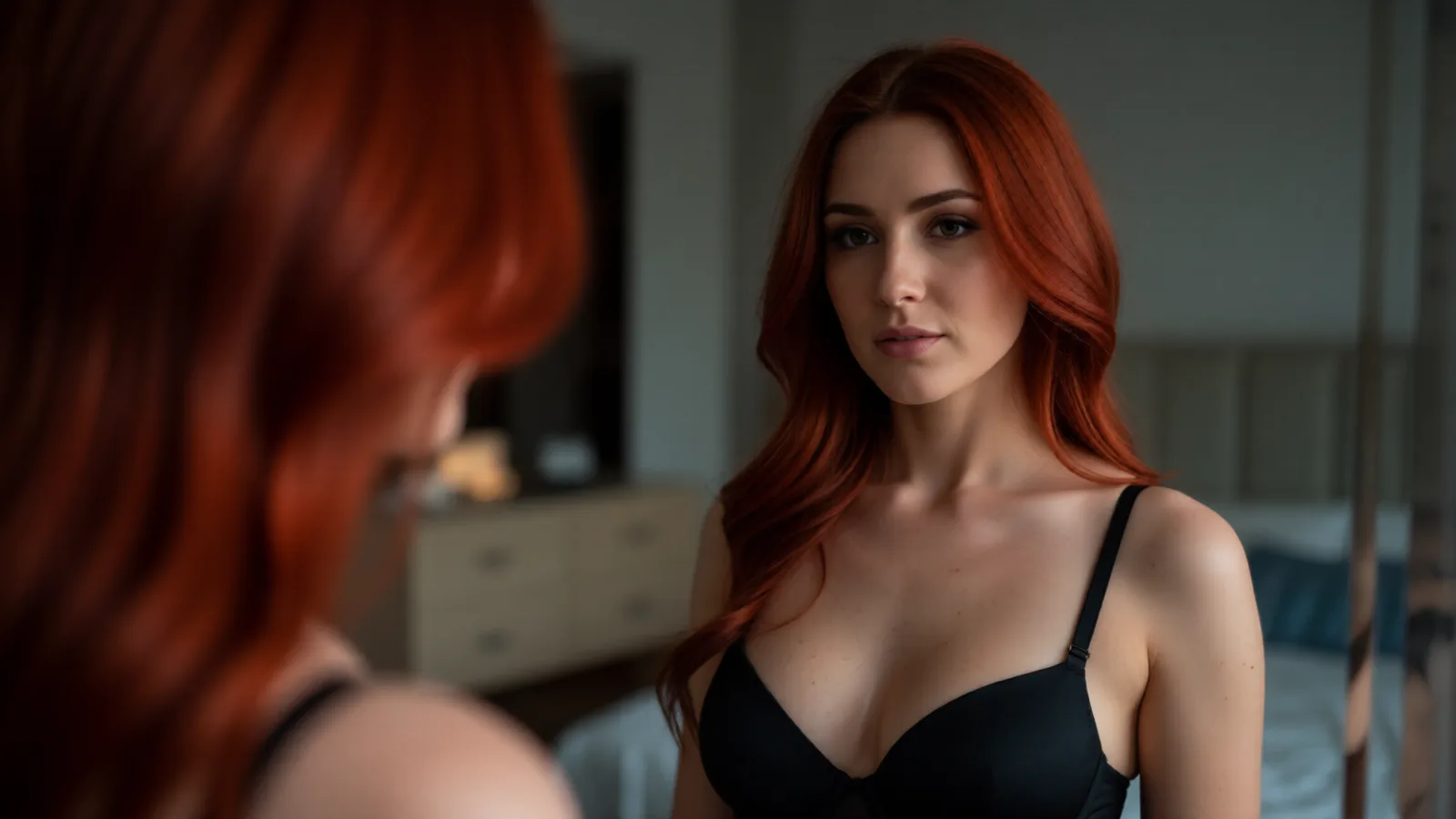
Building the character is the fun part and the easy part. You pick a face, a body, an age, a job, a personality, and a few minutes later she exists. Then you ask for a photo of her, and another one an hour later, and the two pictures are of different women who happen to share a hair colour.
That drift is the whole problem, and it is decided by a design choice most products never explain: what the image generator is given as the reference for who she is. This guide covers how character creation works, why consistency breaks, and the four checks worth running before you invest hours in someone who will not survive the week.
What actually gets created
A character is two things wearing one name: a description the chat model reads, and one or more images the generator uses. The description drives how she talks. The images drive whether she looks like herself.
The description is the part creation screens spend their time on — personality, backstory, how she addresses you. It is cheap to store and easy to keep stable, which is why chat personality rarely drifts.
The images are where products differ. The good design stores a canonical reference image the moment the character is made, and generates every later picture from that same image. The weak design keeps only the description and re-derives her appearance from text each time, or worse, generates the next picture from the last one, which compounds small errors until she is someone else.
| Reference used | Result after a week | How to spot it |
|---|---|---|
| One canonical image | Same woman, different scenes | Old and new photos match in the face |
| Text description only | A type, not a person | Same hair and build, different face each time |
| Last generated image | Gradual drift into someone else | Compare the first and the twentieth picture |
Why the face drifts
Image models rebuild a face from scratch every time. Given only words — twenty-eight, dark hair, green eyes, slim — they will produce a plausible woman matching that description, and a different plausible woman next time. The description does not identify a person; it describes a category.
Feeding the previous output back in feels like it should fix this, and it is worse. Each generation introduces small errors, and using the result as the next reference compounds them: the face rounds out, distinguishing features fade, unusual traits normalise toward the average. Characters with anything out of the ordinary — unusual skin, unusual eyes, tattoos in specific places — degrade fastest, because those are exactly the details a model smooths away.
The fix is unglamorous and decisive: one reference image, stored once, used for every generation forever. Everything else — outfit, pose, setting, what she is doing — is described in words on top of that fixed identity.
This is also why some apps quietly limit you to preset characters. Consistency is easy when the reference images were produced in advance by the operator; it is harder when every user can invent someone new at two in the morning.
Four checks before you commit
All four fit in a free session or a first subscription month, and they tell you whether the character you are about to build will still be herself in a month.
- Generate two pictures in different settings, then compare the faces side by side rather than one after the other. Drift is obvious in a pair and invisible in a sequence.
- Give her one unusual trait — a distinctive eye colour, a tattoo in a specific place, anything non-standard — and check whether it survives three generations.
- Ask for a picture of something specific you discussed in chat. If the image ignores the conversation, chat and generation are separate systems and always will be.
- Check what happens when you ask for something explicit. If the chat goes further than the pictures, the two have different limits and you will hit that wall constantly.
Making her yours rather than a preset
Once consistency is handled, the interesting question is how much of her is actually yours. Most platforms offer a roster; fewer let you create someone from scratch; fewer still let you keep generating new pictures of that person indefinitely rather than unlocking a fixed gallery.
It is worth being honest about the trade-off. A preset character made by the operator usually looks better out of the gate, because someone curated the reference image and tested it. A character you design is yours, and the quality depends on the reference the system builds for her at creation time — which is why that step matters more than any personality slider.
The practical middle ground: start from a roster character to see whether the pipeline holds up, then build your own once you trust it.
How it works on nsfw.fun
You can chat with a roster character or design your own. Either way, the character gets one canonical reference image, and every photo and video after that is generated from it — never from the previous result — so she stays recognisably the same person across sessions.
Pictures come from the same place as the conversation, with the same limits, so what she describes is what the generator will produce. You choose an outfit, a pose and a setting, or describe something specific in your own words. Video works the same way, from the same reference.
Pricing is a single Premium plan at $19.99 every 30 days or $149.88 a year, with a hundred keys refilled monthly. A photo costs one key and a video costs ten, and the cost is shown on the button before you press it. Everything you generate is private to your account unless you deliberately publish it.
Frequently asked questions
How do I make an AI girlfriend and get pictures of her?
Design the character (appearance, age, personality), then generate images of her from the platform's generator. The part that matters is whether the platform keeps a fixed reference image of her — without one, each picture is a new woman who matches the description.
Why does my AI character look different in every picture?
Because the generator is working from a text description rather than a stored reference image, or because it is generating each picture from the previous one. The first produces a type rather than a person; the second drifts a little further every time.
Can I generate explicit pictures of a character I created?
On adult platforms, yes, within their limits — which everywhere serious means no real or identifiable people and nothing involving minors. Check that the image pipeline shares the chat's limits, or the conversation will keep promising more than the pictures deliver.
Is it better to create my own character or use a preset?
Presets usually look better immediately because the operator curated the reference image. A character you create is yours and can look just as good if the platform builds a proper reference for her at creation. Try a preset first to test the pipeline, then build your own.