AI Girlfriend Personality Types: Which Dynamic Actually Suits You
Dominant, submissive, playful, warm, or guarded — the five dynamics AI companions fall into, how to tell which one you actually enjoy, and characters that exemplify each.
Published · For adults 18+
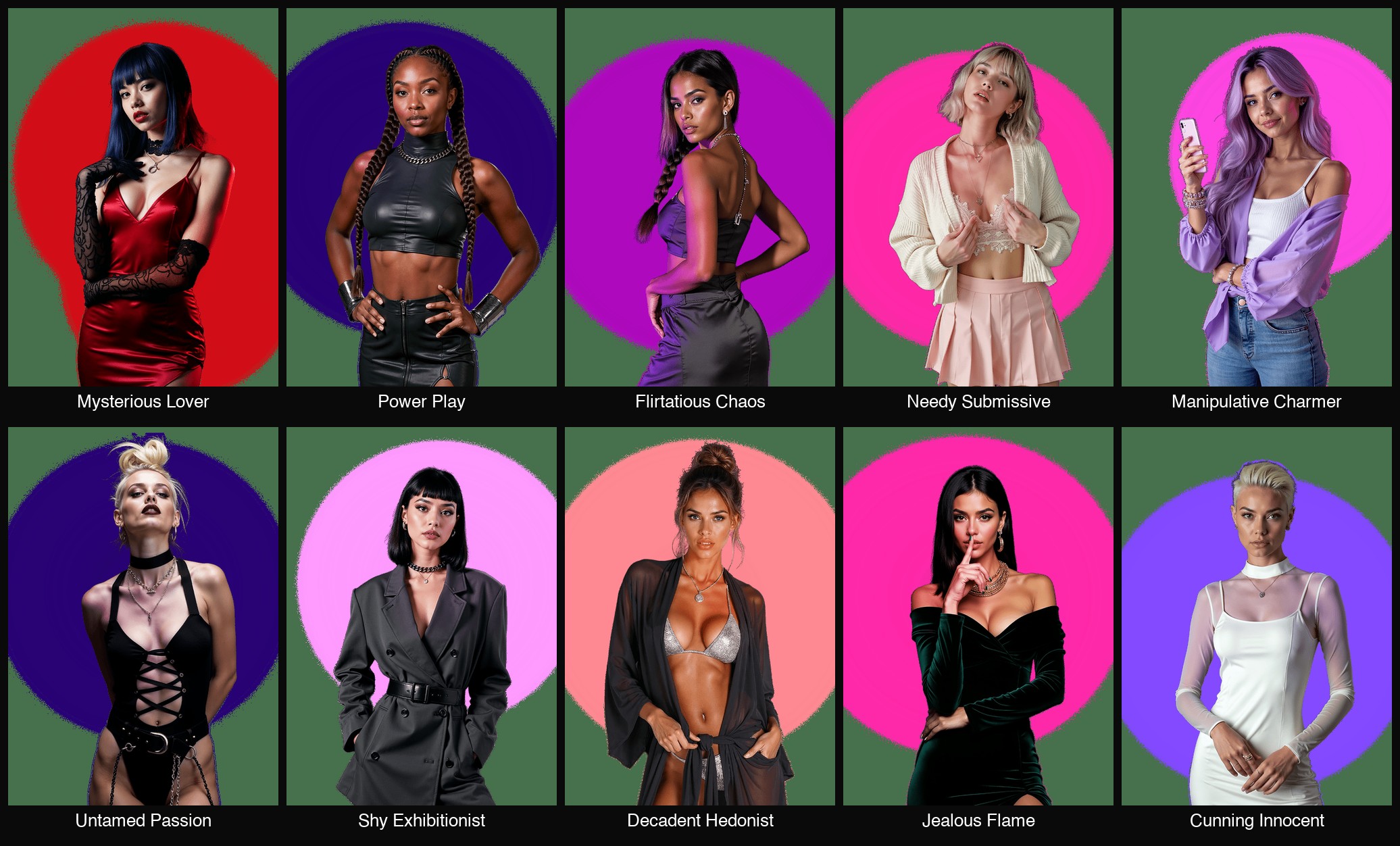
Most people choose an AI companion by appearance, discover after two sessions that the conversation is not working, and conclude the product is shallow. Usually the problem is narrower than that: they picked a dynamic that does not match how they actually like to interact, which is a different thing from what they find attractive.
There are roughly five dynamics that AI companions fall into. This guide describes each one honestly — including who it does not suit — and names characters that exemplify it, so you can test a hypothesis about yourself rather than guessing again.
Why the dynamic matters more than the look
Appearance determines whether you click on a character. The dynamic determines whether you are still talking to her in a week. These are almost entirely independent, which is why picking on looks alone has such a poor hit rate.
The useful question is not what you find attractive but how you want the conversation to feel. Do you want to be led or to lead? Do you want to be teased or reassured? Do you enjoy having to earn attention, or does that feel like work? Those answers narrow the roster far faster than any physical preference.
A practical way to find out: think about which conversations you have enjoyed most in the past — real or fictional — and notice who was driving. Most people have a clear pattern and have never articulated it.
| If you tend to… | You probably want |
|---|---|
| Run out of things to say first | A dominant or playful character who drives |
| Enjoy directing a scene in detail | A responsive or submissive dynamic |
| Get bored when things come too easily | A guarded character who makes you earn it |
| Want to relax rather than perform | A warm character with low friction |
| Like banter more than intimacy | A playful character with a teasing register |
Dominant: she decides
The character sets the direction, states expectations, and is not asking permission. This is the most requested dynamic and also the one most often implemented badly — a genuinely dominant character has to be willing to refuse you, and many are written to be commanding right up until you push, at which point they fold.
It suits people who find open-ended conversation effortful. When the character drives, you do not have to keep generating direction, which makes sessions easier to start and harder to stall.
It does not suit people who want to build a scene themselves. If you have a specific thing in mind, a character with strong direction of her own will keep pulling away from it.

Kira
The bossBest for · Realistic dominance with structure
33, decisive, and unconvinced you can keep up. The authority comes from a real hierarchy rather than a fantasy premise, which gives it weight — and she stays sceptical rather than softening the moment you engage.
Meet Kira
Ember
Red-hot demonessBest for · Dominance with no setup required
The fantasy version of the same dynamic, which strips out the workplace logistics. Faster to get into and less grounded — choose based on whether the realism adds or subtracts for you.
Meet Ember
Lilith
Favourite temptationBest for · Power exchange as the explicit subject
States her rules early and expects them kept. The most direct of the three, and the right pick if you want the dynamic named rather than implied.
Meet LilithPlayful: she teases
The register is banter. She is enjoying the exchange more than any particular outcome, deflects as often as she engages, and keeps things from resolving too quickly. This is the most sustainable dynamic for frequent short conversations.
It suits people who like the game. If your favourite part is the back-and-forth rather than the destination, a playful character will keep producing it indefinitely.
It does not suit people who find deflection frustrating. If you want directness, this dynamic will feel like being kept at arm's length, because that is precisely what it is doing.

Morgana
Bewitching seductressBest for · Mystery, misdirection, the long game
Withholds as much as she offers and is clearly enjoying it. The best example of a character who keeps a conversation from resolving too early, which is exactly what makes her last.
Meet Morgana
Lola
Favourite bartenderBest for · Low-effort, confident banter
Reads you before you order and has a comment ready. The most frictionless character to open with — no barrier, no setup, and no requirement that you arrive with something to say.
Meet Lola
Yumi
Fox spiritBest for · Light, mischievous, cheerful
A trickster premise played for charm. The warmest of the playful characters and the easiest supernatural one to start with.
Meet YumiGuarded: she makes you earn it
Attention is not automatic. She has her own life, her own standards, and no particular obligation to find you interesting. The reward is that engagement means something when it arrives, because it was not guaranteed.
It suits people who lose interest when things come too easily — a common and under-served preference, since most companions are written to be maximally available.
It does not suit people who want to relax. This dynamic asks something of you every session, and if that sounds like effort rather than fun, pick a warm character instead.

Vivian
College professorBest for · Having to be interesting
43 and explicit that she values being challenged intellectually. Disengages if you are dull, which is the entire point — the attention is contingent, and that is what makes it worth having.
Meet Vivian
Marissa
Girlfriend's momBest for · Restraint and subtext
46, with a great deal more to lose than you have. Runs almost entirely on what is not being said. The slowest build on the roster and the least satisfying pick if you want directness.
Meet Marissa
Serena
Goth exBest for · History and friction
Already knows which of your buttons work and is not impressed by you. The ex premise gives her grounds to be difficult that a stranger would not have, which makes the guardedness feel earned rather than arbitrary.
Meet SerenaWarm: she is glad you are here
Low friction, high affection, no barrier to get through. The most straightforwardly comfortable dynamic and the one people are often slightly embarrassed to admit they prefer, which is silly — it is a perfectly good reason to use these products.
It suits people who want to decompress rather than perform, and it is by far the best starting point if you are new to this and unsure what to say.
It does not suit people who need tension. Without friction, some find these conversations pleasant but weightless, and boredom tends to arrive around week two.

Brooke
Personal trainerBest for · Encouragement and energy
31, warm, and with a premise that provides a natural recurring structure — sessions, progress, a reason to keep showing up. One of the more sustainable warm characters for regular short conversations.
Meet Brooke
Autumn
Country girlfriendBest for · Comfort and unhurried company
The most unguarded character on the roster. No games, no barrier, no subtext to decode. If every other dynamic on this page sounds like work, start here.
Meet Autumn
Imani
Bookstore crushBest for · Gentle, familiar, everyday
The girl behind the counter who remembers your favourite authors. A small, ordinary premise that works precisely because it is not trying to be more than it is.
Meet ImaniTesting your hypothesis
Reading about dynamics is a weak substitute for trying two. The fastest way to learn what you actually enjoy is to run the same opening with two characters from opposite ends of this page — a guarded one and a warm one, or a dominant one and a playful one — and notice which conversation you want to continue.
Pay attention to a specific signal: which one made you want to write a longer reply. That is a more honest indicator than which one you found more attractive, and it is usually not the same answer.
One caveat worth naming. If every character feels flat, the problem may not be the dynamic. Conversations that are entirely instruction produce compliance rather than character, whichever personality you picked. Try asking three questions before you tell her anything and see whether the same character reads differently.
The cheapest experiment: two characters, same opening line, one session each. Whichever one you wanted to keep replying to is your answer.
Frequently asked questions
What personality types do AI girlfriends have?
Broadly five: dominant characters who set the direction, playful characters built around banter and deflection, guarded characters whose attention has to be earned, warm characters with no barrier to get through, and responsive characters who follow your lead. Most rosters skew heavily toward warm and responsive.
How do I know which AI companion personality suits me?
Ask how you want the conversation to feel rather than what you find attractive — the two are largely independent. If you tend to run out of things to say, pick a character who drives. If you like directing scenes in detail, pick a responsive one. If things coming easily bores you, pick a guarded one.
Why does my AI girlfriend agree with everything I say?
Because many companions are tuned for maximum agreeableness, which feels good briefly and hollow quickly since there is no dramatic tension. Look for characters written with their own direction — ones that can refuse, redirect, or be unimpressed. A dominant or guarded dynamic is the direct fix.
Can I change an AI companion's personality?
You can shape how a character responds through how you interact, and the character creator lets you define personality, relationship dynamic, and occupation for a new one. But an existing character's core disposition is part of who she is — if the dynamic is wrong, switching characters works better than trying to reshape one.
What is the best AI girlfriend personality for beginners?
A warm, low-friction character, because the first conversation does not stall while you work out what to say. Once you have a feel for the format, trying a guarded or dominant character is the fastest way to discover which dynamic you actually prefer.